121 Jericho Turnpike Mineola, NY 11501



Missing a tooth changes more than your smile — it changes how you chew, how you speak, and sometimes how confident you feel walking into a room. If you live in Mineola, NY or one of the surrounding communities, PM Dental Care is right here in town, and this is one of the questions our team hears from patients almost every week: implants, bridges, or dentures — which one actually makes sense? Here’s how a dentist in Mineola looks at the differences between the three, so you can walk into your own consultation already understanding the trade-offs.
What’s the Real Difference Between These Three Options?
In simple terms: a dental implant replaces the tooth root itself, a bridge replaces the missing tooth by anchoring onto the teeth next to it, and a denture sits on top of the gums without attaching to anything permanently. That one distinction — root replacement versus surface replacement versus a removable appliance — is what drives almost every other difference between them, from how long they last to how they affect the rest of your mouth.
How Do Dental Implants Work?
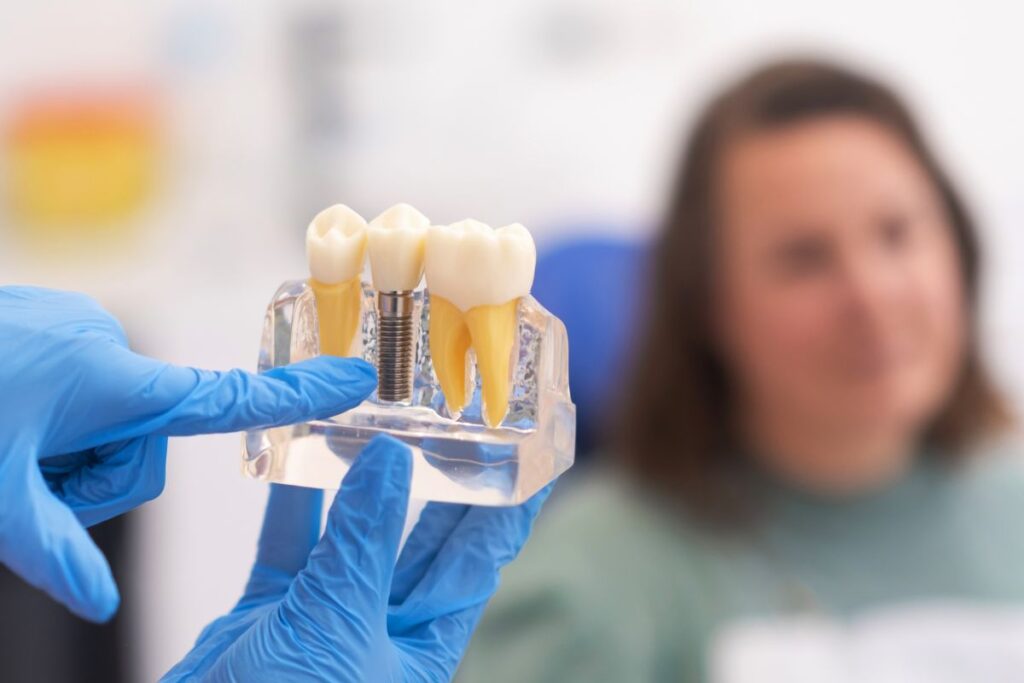
A dental implant is a small titanium post placed directly into the jawbone where a tooth is missing. Over time, the bone bonds with the titanium, creating a foundation that’s meant to function like a natural tooth root, and this same process is also what helps preserve the jawbone structure that would otherwise gradually break down after tooth loss.
A few things worth knowing about implants before comparing them further:
- They’re placed in a process that typically takes six to eight months from start to finish, since the implant needs time to bond with the jawbone before a replacement tooth is attached
- Even single-stage implants, which don’t require a second procedure to uncover them, still need a minimum of six weeks of healing before the visible tooth is placed
- In some cases, an implant can be placed at the same time as an extraction, which can reduce the total number of procedures involved
- Candidates generally need adequate jawbone density (or are open to bone grafting), good general health, and a willingness to commit to the multi-month healing timeline
- Because an implant doesn’t rely on neighboring teeth for support, it avoids the need to alter or grind down healthy teeth next to the gap
How Does a Bridge Compare?

A bridge takes a different approach entirely. Instead of replacing the root, it fills the gap by anchoring an artificial tooth to the natural teeth on either side of it. This generally means:
- The adjacent teeth need to be prepared and reshaped to support the bridge, which is a permanent change to those teeth
- Because there’s no surgical healing period involved, the overall timeline is often shorter than the implant process
- The bridge relies on the health and strength of the neighboring teeth, so those teeth need to be in reasonably good condition
- Like any restoration anchored on natural teeth, bridges eventually need to be replaced, and consistent brushing and flossing around them matters for keeping the supporting teeth healthy
Where Do Dentures Fit In?
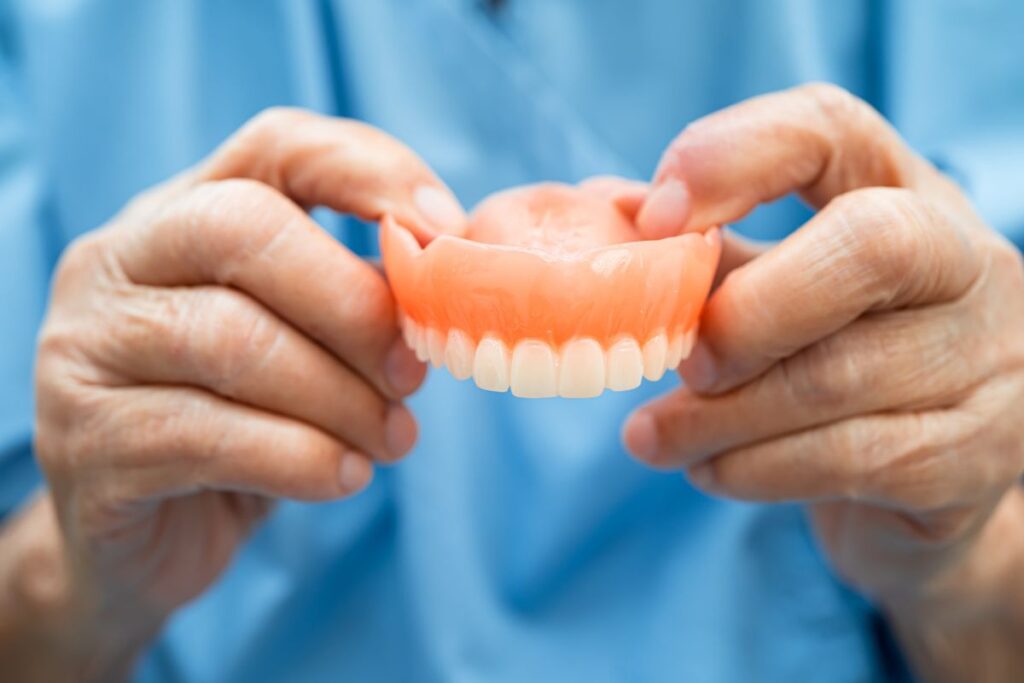
Dentures work differently from both of the above. Rather than being fixed in place, they’re removable appliances designed to replace some or all of the teeth in an arch. Generally speaking:
- Dentures don’t require surgery or altering any remaining natural teeth, which makes them a more accessible starting point for some patients
- They rest on the gums rather than integrating with the jawbone, so they don’t offer the same bone-preserving effect that an implant does
- They may need periodic adjustments over time as the shape of the gums and jaw naturally changes
- For patients missing most or all of their teeth in an arch, dentures can address the situation without needing a procedure for every individual tooth
Quick Comparison at a Glance
| Dental Implants | Bridges | Dentures | |
| Fixed or removable | Fixed | Fixed | Removable |
| Affects neighboring teeth | No | Yes, they’re reshaped | No |
| Helps preserve jawbone | Yes | No | No |
| Typical timeline | 6–8 months | Shorter, no healing period | Shorter, no healing period |
| Surgery involved | Yes | No | No |
So Which One Is Actually Right for You?
There isn’t a single “best” option here — there’s a best option for your mouth, your health, and what you’re trying to solve. Someone missing a single tooth with strong adjacent teeth and no interest in surgery might lean toward a bridge. Someone who wants to avoid touching healthy teeth at all, and who’s comfortable with a longer treatment timeline, might be a stronger candidate for an implant. Someone missing several teeth across an arch might find dentures address the situation more practically.
The honest answer only comes from an actual exam — one that looks at your jawbone density, the condition of your remaining teeth, your overall health, and what matters most to you day to day. If you’re weighing these options, a visit with a dentist in Mineola who can walk through your specific mouth, not a general comparison chart, is what actually tells you which path fits.
Ready to Find Out Which Option Fits Your Mouth?
Comparing implants, bridges and dentures on paper only gets you so far — the right answer depends on what’s actually going on with your teeth and jawbone. PM Dental Care serves Mineola and the surrounding area, and our team can walk you through a proper dental implant evaluation alongside your other options, so you leave with a plan built around your mouth rather than a generic recommendation. Call 516-746-1111 to schedule a consultation.
According to the American Dental Association, the right tooth-replacement option depends on individual factors like jawbone health, gum condition and personal preference, which is why a professional evaluation matters more than any general comparison.
Frequently Asked Questions
Is a dental implant more expensive than a bridge or denture upfront?
Implants typically involve surgery and a longer treatment timeline, which tends to make the upfront process more involved than a bridge or denture, though the right choice depends on your individual case and goals.
Do bridges damage the teeth next to the gap?
The neighboring teeth need to be reshaped to support the bridge, which is a permanent alteration, so their health and structure matter when deciding if a bridge is the right fit.
Can I switch from dentures to implants later?
This depends on factors like jawbone density and overall health, and is something to discuss directly during an exam rather than assume either way.
Do implants really last longer than bridges or dentures?
With proper care, including regular brushing, flossing and dental visits, implants are designed to last many years, often decades, since they don’t rely on other teeth for support the way a bridge does.
Will insurance cover any of these options?
Coverage varies significantly by plan and by procedure, so it’s worth reviewing your specific benefits with your insurance provider and your dental office before deciding.
