121 Jericho Turnpike Mineola, NY 11501


Replace Missing Teeth with Confidence
All of your teeth play an important role in speaking, chewing and maintaining proper alignment with the rest of your mouth. Tooth loss does not have to be an inevitable part of aging, but when it does happen, those teeth need to be replaced to maintain proper function. Fortunately, there are effective options for correcting tooth loss, and a dental bridge is one of the most reliable.
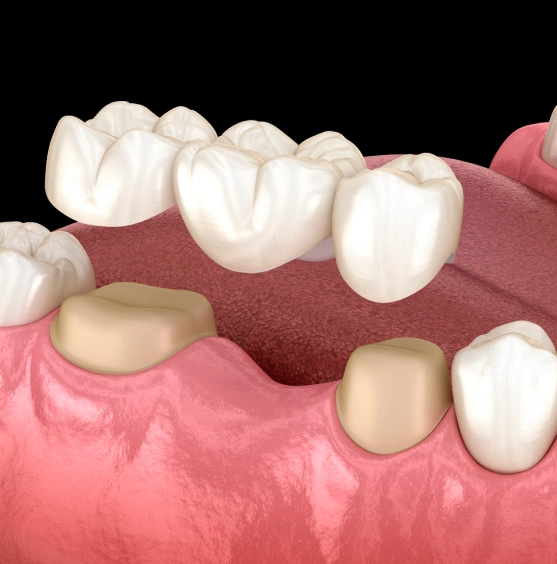
A dental bridge fills the gap left by one or more missing teeth by attaching artificial teeth to the natural teeth on either side of the space, known as abutment teeth. Bridges can be fixed in place permanently or designed to be removable, depending on your specific needs and the recommendation of your doctor. We help patients from Mineola, NY, Garden City, New Hyde Park, East Williston and Roslyn Heights restore missing teeth with a bridge.
Schedule a Dental Bridge Consultation
What Is a Dental Bridge?
A dental bridge, also called a fixed partial denture, is a device that fills the gap where one or more teeth are missing. Fixed bridges are bonded permanently into place and can only be removed by a dental professional, offering greater stability. Removable bridges, as the name suggests, can be taken out for cleaning, though they generally provide less stability than a fixed option.
Fixed bridges are typically created by placing crowns on the abutment teeth on either side of the gap, or by bonding the artificial tooth directly to the adjacent natural teeth. Removable bridges are held in place with metal clasps or precision attachments instead.
Why a Dental Bridge May Be Right for You
Replacing a missing tooth with a bridge offers benefits that reach beyond appearance alone:
- Restores your bite and chewing function, since teeth are designed to work together and missing teeth place unusual stress on the remaining teeth and gums
- Supports your facial structure, since the loss of a back tooth can cause the mouth to sink and the face to appear older over time
- Reduces the risk of gum disease, one of the most significant side effects of leaving missing teeth unaddressed, since gum disease risk increases when gaps are left untreated
- Improves speech clarity, since missing teeth, particularly front teeth, are used to form many of the sounds needed for clear speech
- Protects your remaining teeth by helping prevent the shifting and misalignment that often follows untreated tooth loss
How a Dental Bridge Is Placed, Step by Step
Placing a dental bridge is typically completed over two to three appointments:
1
Preparing the Abutment Teeth
At your first appointment, your doctor prepares the teeth on either side of the gap by removing a portion of the enamel and dentin, creating space for the crowns that will support the bridge.
2
Taking Impressions
Since the bridge must be fabricated precisely to ensure a correct bite and match the surrounding teeth, impressions of your teeth are taken and sent to a dental lab where your custom bridge will be constructed.
3
Wearing a Temporary Bridge
While your permanent bridge is being made, a temporary bridge may be placed to protect the prepared teeth and maintain normal function in the meantime.
4
Placing the Permanent Bridge
Once your custom bridge is ready, it is fitted and checked for proper fit and bite. Dental crowns are cemented onto the abutment teeth to provide support, while a pontic, or false tooth, fills the space left by the missing tooth.
5
Final Adjustments
Your doctor makes any final adjustments needed to ensure the bridge feels comfortable and functions naturally alongside your existing teeth.
Who Is a Candidate for a Dental Bridge?
A dental bridge may be a good option if you:
- Are missing one or more teeth and want a permanent, stable solution
- Have healthy, strong teeth on either side of the gap that can support a bridge
- Are experiencing shifting of nearby teeth due to an untreated gap
- Have noticed changes in your bite, speech or facial appearance since losing a tooth
- Prefer a fixed solution over a removable option like a partial denture
Our doctors will evaluate the condition of your abutment teeth and overall oral health to determine whether a fixed or removable bridge is the right choice for your situation.
How to Care for Your Bridge Long Term
Because a fixed bridge relies on the surrounding natural teeth for support, keeping those teeth and the bridge itself clean is critical to its long-term success. A consistent routine of brushing and flossing helps protect both the bridge and the abutment teeth supporting it. Regular cleanings and exams also allow our team to monitor the condition of your bridge and the health of the surrounding teeth and gums over time.
Restore Your Smile with a Dental Bridge
A missing tooth does not have to affect your bite, speech or confidence any longer. Schedule a consultation with our team at PM Dental Care in Mineola, NY to find out if a dental bridge is right for you.
Book Your Appointment Online
